6 Tips for Applying Liquid Waterproofing Products


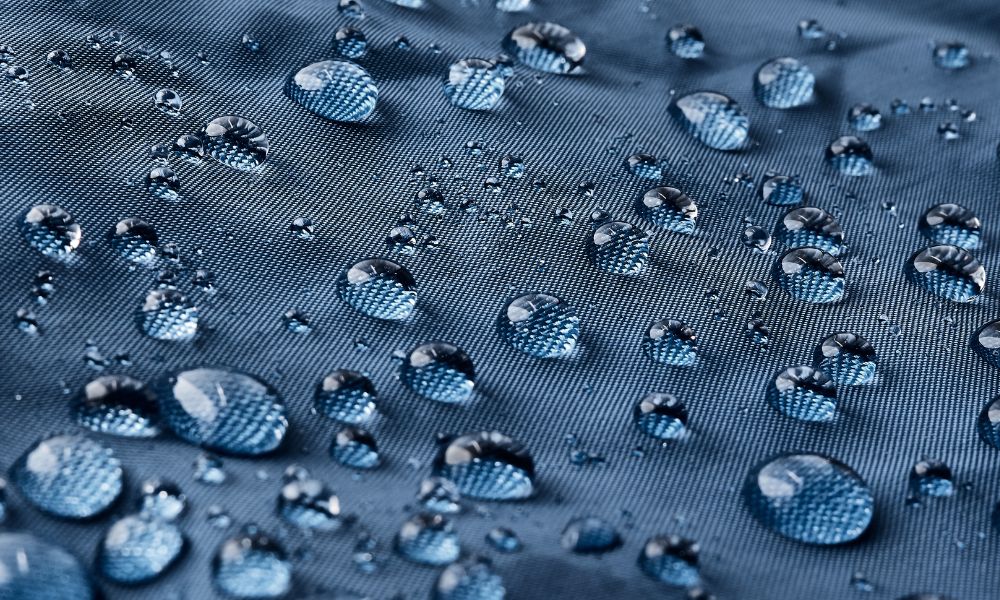
There are various ways to waterproof your surfaces, but liquid membranes remain some of the best application forms. You can use liquid waterproofing on roofs, cellars, garages, bridges, dams, and more to help maintain the structure’s integrity. If the waterproofing membrane doesn’t undergo correct installation, though, it could lead to damage and leaks and can be a danger to those in or around the building.
Here, we’ll get into information on waterproofing and six tips for applying liquid waterproofing products to maximize performance and minimize costs.
Why Is Waterproofing Necessary?
A high-quality waterproofing membrane is a barrier between the earth and the concrete. This prevents water and other chemicals from infiltrating your structure. Since concrete is a porous material, it can crack over time and possibly cause a leak from water in the below-grade foundation. Without waterproofing, water and harmful chemicals can migrate through the concrete, putting tenants in danger.
The Benefits of Using Liquid Waterproofing Products
Contractors have been using liquid waterproofing products for convenience and time efficiency. This version of waterproofing is flexible, adaptable, and easy to apply to decks, roofs, and even water tanks. This type of protection has many benefits. Here are some of the primary ones.
Time Efficiency
It’s much easier to apply liquid waterproofing than it is to install sheet membranes. Cutting sheets into shapes and handling small details and penetrations, such as pipes, takes time and expertise. Projects that use sheet membranes can take over two days.
Liquid membranes could take about half a day or one full day. Your crew will have more time to complete more tasks faster by using liquid waterproofing systems.
Easy Application
Liquid waterproofing is the easiest way to apply waterproofing to any surface. This system is quick to apply, depending on the crew size and surface. Many contractors favor liquid waterproofing due to how easy it is to put it on both detailed sections or larger spaces. Another reason many people favor liquid waterproofing is that it makes it effortless to waterproof pipes and other parts that carry liquid compared to cutting sheets of waterproofing membranes.
Seamless Finish
Common places where waterproofing systems fail are at the joints and seams. When liquid waterproofing cures, it becomes one solid membrane. Consequently, no joints, seams, or cracks exist in it. When applied properly, water and chemicals can’t get through.
Versatility and Adaptability
With prefabricated waterproofing sheets, finding the exact amount you need to fit the surface is challenging. However, with liquid waterproofing systems, you can overcome that challenge easily. Liquid waterproofing conforms to any shape and adapts to any imperfections on the surface.
A good liquid waterproofing product can expand and contract as the weather changes and can move with minor structural shirts. Even with a small crack, it still does its job and protects the building.
Tips for Applying Liquid Waterproofing Efficiently
Here are some useful pointers for applying liquid waterproofing in the most effective way possible.
Don’t Forget To Prep
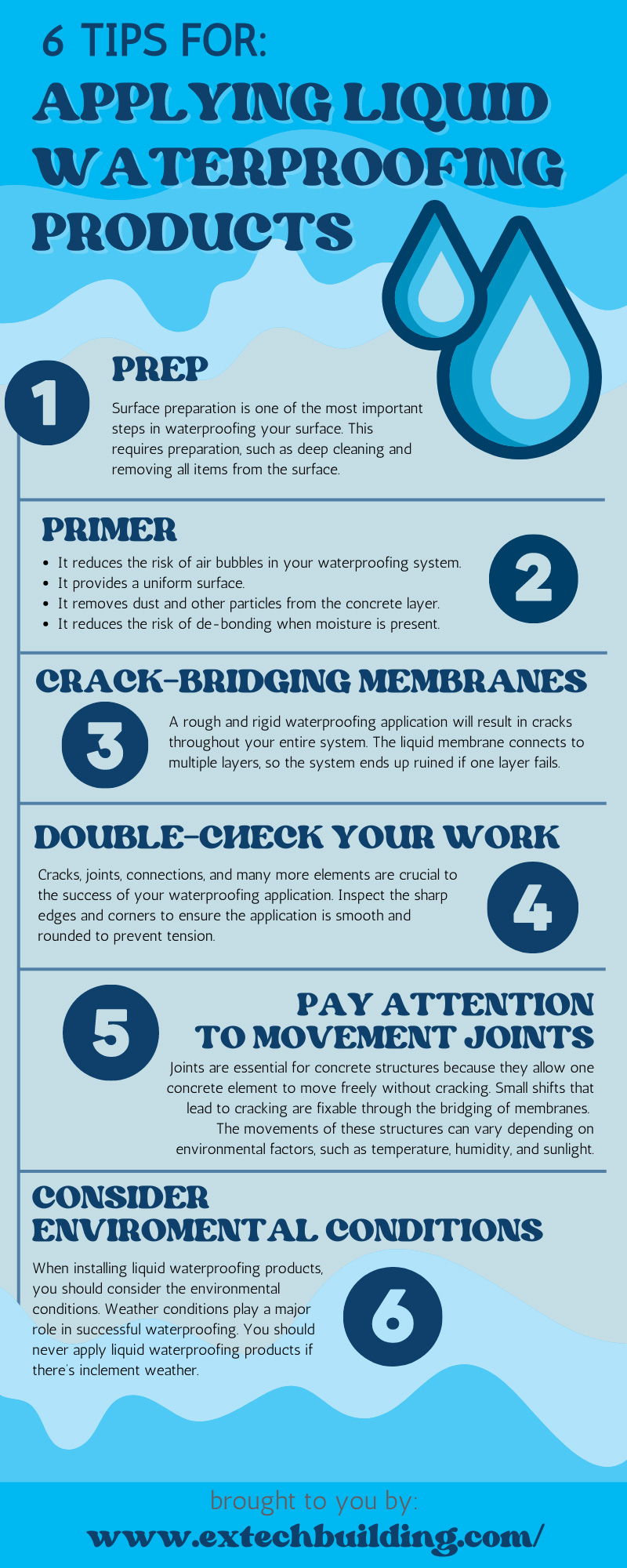
Surface preparation is one of the most important steps in waterproofing your surface. Your manufacturer’s guidelines may include more specific instructions for cleaning the surface to ensure it’s free of grime, dirt, and other debris.
Liquid waterproofing systems demand full bonding on their surfaces. Their performance depends on the adhesive quality. This requires preparation, such as deep cleaning and removing all items from the surface. You should also check the weather to ensure that the environmental conditions won’t interfere with the adhesive product requirements.
Use a Primer
Although most liquid waterproofing products don’t require you to use a primer, it still has many benefits. These are some to be aware of:
- It reduces the risk of air bubbles in your waterproofing system.
- It provides a uniform surface.
- It removes dust and other particles from the concrete layer.
- It reduces the risk of de-bonding when moisture is present.
Consider Crack-Bridging Membranes
A rough and rigid waterproofing application will result in cracks throughout your entire system. The liquid membrane connects to multiple layers, so the system ends up ruined if one layer fails. If you don’t bridge the cracks, that could result in leaks and damages.
Another plus of bridging membranes is that it protects against chemicals, rushing water, and other penetrative liquids.
Always Double-Check Your Work
The devil is in the details, and it’s always best to look at your work before calling it a done deal. Cracks, joints, connections, and many more elements are crucial to the success of your waterproofing application.
Liquid waterproofing is an easier form of application in comparison to its counterparts, but that’s not an excuse not to double-check your work. Inspect the sharp edges and corners to ensure the application is smooth and rounded to prevent tension. You should also check that a smooth layer of the liquid waterproofing product covers your surface.
Pay Attention to Your Movement Joints
Joints are essential for concrete structures because they allow one concrete element to move freely without cracking. Small shifts that lead to cracking are fixable through the bridging of membranes. However, the movements of these structures can vary depending on environmental factors, such as temperature, humidity, and sunlight.
Please pay attention to your movement joints to see what they need to prevent damage over time. Ensure there’s a proper connection between the waterproofing membrane and the joint sealant from one side so that the adhesive can maintain its movement. It’s best to double-check to ensure that water can’t come between the waterproofing membrane and the joint.
Consider the Environmental Conditions
When installing liquid waterproofing products, you should consider the environmental conditions essential to the application’s outcome. Weather conditions play a major role in successful waterproofing. You should never apply liquid waterproofing products if there’s inclement weather.
At the same time, we recommend applying the coating away from direct sunlight and in cooler conditions. Since waterproofing products typically undergo installation outdoors, having perfect weather is critical to the outcome of the application. Document and consider factors like air temperature, humidity, and dew points.
As waterproofing methods advance, they become more versatile and adaptable. Although most manufacturers have similar application guidelines, it’s always best to heed the instructions on your product. Following the manufacturer's steps will ensure you don’t miss any important steps. Incorrect application and poor surface preparation can lead to deterioration and leaks.
We hope our six tips for applying liquid waterproofing products will help you and your team succeed. Check out our online store for premium below-grade waterproofing systems or tools. For any additional information or questions, don’t hesitate to contact us.
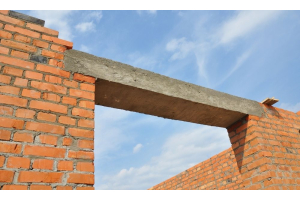
When you have openings in a structure, such as windows, doorways, or fireplaces, it’s essential that you make sure those openings can support the weight above them. In cases like these, where you need to guarantee structural stability, you must employ lintels and headers.