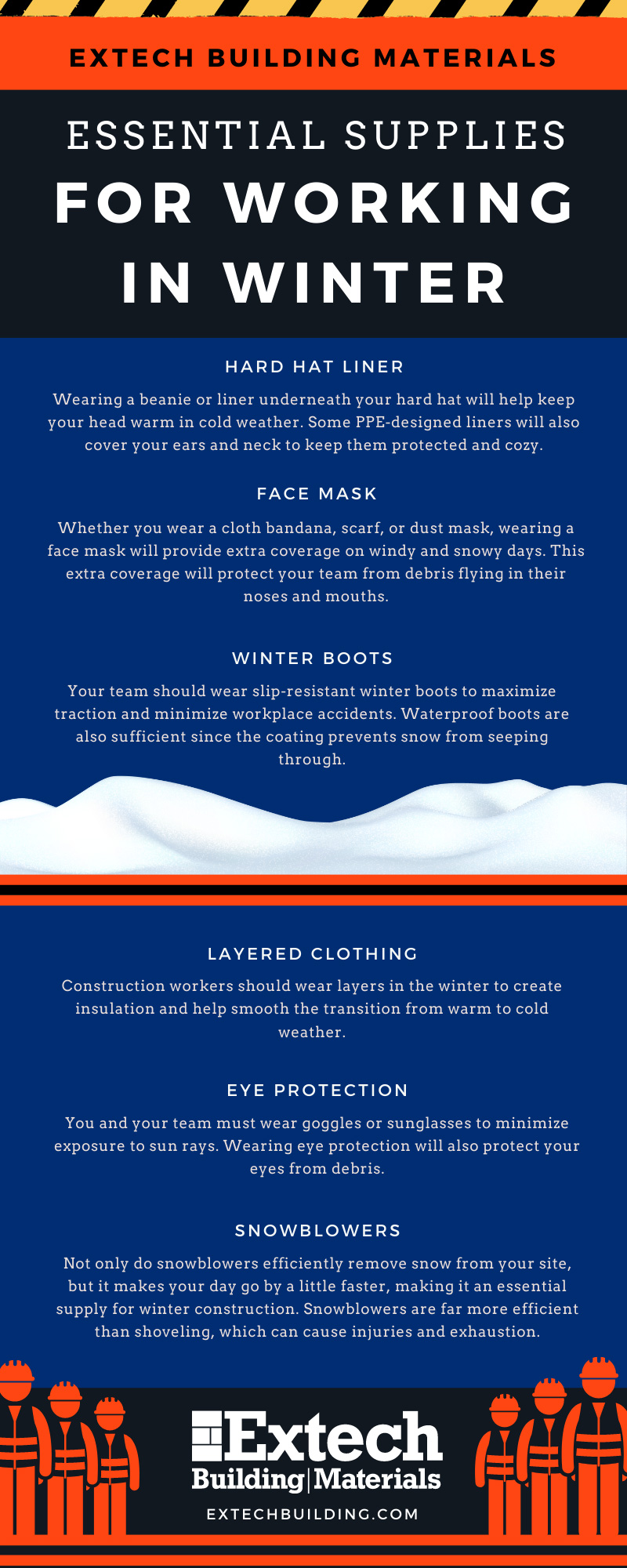
Essential Supplies for Winter Construction



As a construction worker, you know you must prepare to work many days long and in varying weather conditions, including the cold. While working outside in freezing temperatures isn’t ideal, there are ways you can stay warm and meet your deadlines for the day. Here are the essential supplies for winter construction to help prevent accidents or cold stress.
Must-Have Supplies for Working in the Winter
Hard Hat Liner
Although hard hats are thick, they aren’t that warm. Wearing a beanie or liner underneath your hard hat will help keep your head warm in cold weather. Some PPE-designed liners will also cover your ears and neck to keep them protected and cozy.
Face Mask
Whether you wear a cloth bandana, scarf, or dust mask, wearing a face mask will provide extra coverage on windy and snowy days. This extra coverage will protect your team from debris flying in their noses and mouths.
Winter Boots
An icy work zone is inevitable when it’s rainy, cold, and snowy outside. Your team should wear slip-resistant winter boots to maximize traction and minimize workplace accidents. Waterproof boots are also sufficient since the coating prevents snow from seeping through. However, please encourage your team to wear thick socks to reduce the risk of frostbitten toes.
Layered Clothing
Construction workers should wear layers in the winter to create insulation and help smooth the transition from warm to cold weather. The first layer, or the base layer, will protect the skin from getting wet, which can lead to hypothermia.
Your middle layer is also an insulating layer that will help trap heat without holding on to sweat or excess moisture. Your second layer should be a light jacket or thicker flannel made of fleece or wool.
Your final layer, or the shell, will protect you from wind, rain, snow, and cold. Ultimately, your goal is to create a breathable, water and weatherproof outfit.
Eye Protection
People don’t realize that if the snow reflects enough sunlight, it can damage your eyes after a while. You and your team must wear goggles or sunglasses to minimize exposure to sun rays. Wearing eye protection will also protect your eyes from debris.
Snowblowers
Not only do snowblowers efficiently remove snow from your site, but it makes your day go by a little faster, making it an essential supply for winter construction. Snowblowers are far more efficient than shoveling, which can cause injuries and exhaustion.
However, it’s always best to inform your team of the proper ways of using a snowblower to prevent accidents and serious injuries. Employers should remind workers to ALWAYS turn off the snowblower before clearing a jam and to use a stick rather than their hand.
Ways To Prepare Your Equipment for Winter
Use the Proper Fluids, Gases, and Oils
As you know, different machines require different oils and sometimes need specific fluids. It is best to keep the manufacturer guidelines to refer to so you know which oils, gases, and fluids to use and when.
Here are a few things to remember when working with different fluids and oils:
- Brake fluid can freeze if it’s too cold out.
- Check your fluid levels and fill the tank every night to reduce the chances of your equipment freezing.
- Not all coolants are made for the same climate. Choose the proper type to use in freezing environments.
- Replace hydraulic fluids first thing in the morning to keep your heavy equipment in good condition.
Watch the Diesel Exhaust Fluid
Fortunately, with the advancement of technology, more machines monitor the DEF volumes independently. However, it would be best if you still watched the diesel exhaust fluid when the temperature dips below freezing.
Why? Because the DEF can freeze and damage the machine if you attempt to start it. Keeping your machines idle and storing your diesel exhaust fluid in a warm area is the best way to keep your large machines working.
Idle Your Machines
If you’re in an environment with temperatures below -40 °F, it’s best to keep your machines running. In low temperatures, it can take a while for the engines to warm up, and you could face delays.
However, it’s important to note that you shouldn’t leave your machine running at full speed. Keep your machine running at about 1100 to 1200 RPMS to keep the engine warm.
Remember To Clean Your Machines
Everyone in the construction industry knows how valuable machines are to their daily operations; replacing one can break your budget if you don’t keep up with maintenance. Your machines take the most damage than any other tool you use, especially in the winter.
The mud, dirt, or grime accumulated throughout the day needs removing at the day’s end to prevent it from freezing. Once it freezes, it will attach to the machine overnight, which can cause problems when operating it or accessing parts of the machine.
4 Winter Construction Safety Tips
Always Monitor the Weather Reports
Monitoring the weather reports is necessary for keeping you and your team members safe. By monitoring the weather, you can gauge when it’s time to bring your workers inside for the day and how to schedule breaks.
We encourage listening to the National Oceanic and Atmospheric Administration (NOAA) Weather Radio or referring to a chart created by the American Conference of Governmental Industrial Hygienists.
Encourage Your Team To Stay Hydrated
Staying hydrated is essential, no matter the weather conditions. Your team members should drink warm beverages or water, but please encourage them to avoid coffee or caffeinated drinks. Although nothing hits the spot more than a hot coffee on a cold day, it can increase dehydration because it is a diuretic.
Being dehydrated on the job is dangerous and can lead to hypothermia. It is also best to encourage your team members to avoid drinking alcohol because it increases heat loss and dehydration.
Take Breaks In Heated Areas
Strive to make the site as comfortable as possible for your hardworking team members. Adding space heaters to areas where your team can take breaks from the cold is essential. Whether you provide a trailer or tent, the space should be warm and have warm drinks and snacks available.
Tip:
Creating private, heated break rooms is the perfect opportunity to encourage your employees to change their wet clothes and check for any signs of cold stress, frostbite, or hypothermia.
Watch for Winter Health Conditions
Before your team begins their work, remember to conduct a safety meeting to discuss any required safety measures. Train every employee to recognize the signs and symptoms of winter health conditions, especially cold stress.
Create a buddy system where each team member has someone to check on periodically to see how they’re holding up. If a team member isn’t feeling well or displaying hypothermia symptoms, take them to a warm space immediately, call your local emergency response team, and allow them to rest and receive treatment.
At Extech Building Materials, we take pride in being a trustworthy and compassionate construction materials distributor. We want our clients to stay safe and warm this winter and take the necessary steps to ensure their team members work in safe environments with the right supplies. Check out our inventory of materials and supplies to ensure your team completes their projects on time and on budget.

When you have openings in a structure, such as windows, doorways, or fireplaces, it’s essential that you make sure those openings can support the weight above them. In cases like these, where you need to guarantee structural stability, you must employ lintels and headers.