What Are the Different Parts of a Staircase?


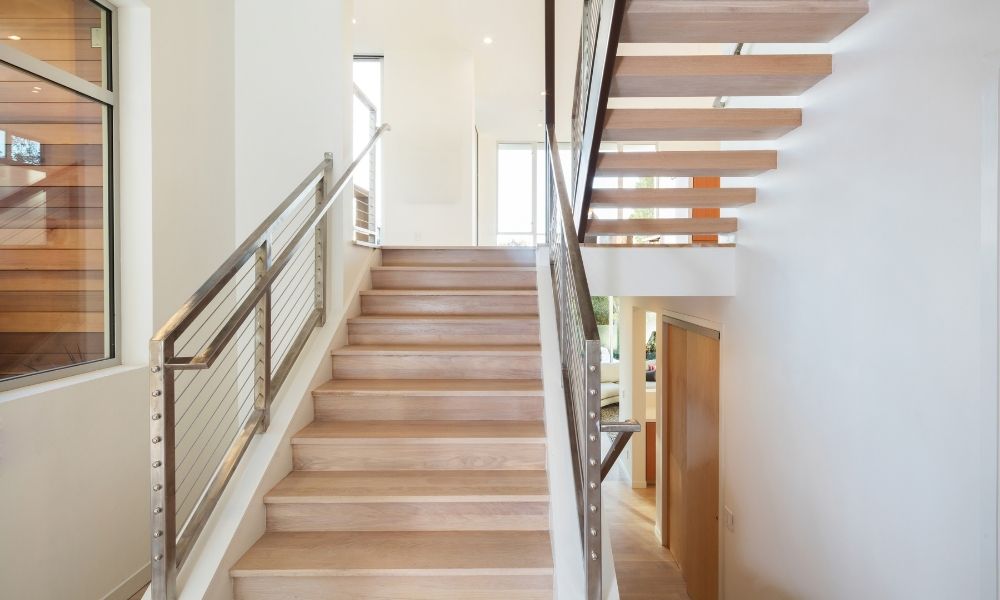
Staircases can help increase the aesthetic appeal of your home while providing quick access to different floors in your house. You may have discussed building a staircase with your contractor, who used terminology you’re unfamiliar with. Before building stairs, it’s important to learn the different parts of a staircase.
A homeowner should know the main parts of a staircase to have a basic conversation with their contractor about the construction process. Below are the main parts of a staircase and their functionality.
Tread
The tread is the horizontal part of the staircase that extends from the front of the stairs to the riser. You put your foot here while walking up and down the stairs. We recommend using a sturdy material for your tread to handle heavy foot traffic. Using limestone for your stair tread ensures longevity.
Riser
The riser is the vertical part of the stair between each tread. Stairs that have risers are called closed tread stairs. However, staircases with a more modern look are built without risers.
Stringer
A stringer is a board that supports each side of the staircase. The inner stringer is located in the wall, while the outer stringer is visible. The risers and treads are settled into the stringer. A staircase always has two stringer boards.
Handrail
A handrail, also called a banister, is what you hold onto for support while walking up or down the stairs. Your contractor can fix the handrail to vertical posts called balusters or a wall. The handrail also has a guardrail, a barrier to the unprotected side of a stair to prevent people from falling.
Landing
The landing is the flat surface at the top and bottom of the staircase. This area provides access to rooms or is part of the staircase where it turns.
Curtail
A curtail step is a decorative step used at the bottom of the staircase that curves around the post. This step is a feature on the side not attached to the wall or on both sides if it’s an open staircase.
Nosing
Nosing is the front of the tread that projects beyond the riser. We recommend placing anti-slip strips or a runner here to make navigating the steps easier.
No matter your aesthetic or the material used to build your staircase, the parts are the same. Now that you know the different parts of a staircase, the next time you speak with your contractor about staircases will go smoother.
When you have openings in a structure, such as windows, doorways, or fireplaces, it’s essential that you make sure those openings can support the weight above them. In cases like these, where you need to guarantee structural stability, you must employ lintels and headers.